
As a die-hard Death Note fan, I still get chills thinking about the first time I binge-watched the entire series late into the night. The Death Note anime hooked me from episode one with its mind-bending twists and moral dilemmas that make you question everything. If you’re new to it or revisiting, let me break it down based on my years of obsessing over this masterpiece. I’ll cover the basics, episodes, the series as a whole, and those unforgettable characters, all while sharing why it remains one of the greatest anime out there.
Overview of Death Note Anime
The death note anime started as a groundbreaking manga by writer Tsugumi Ohba and illustrator Takeshi Obata, serialized in Weekly Shōnen Jump from 2003 to 2006. It quickly exploded in popularity, leading to an anime adaptation that aired from October 2006 to June 2007. Produced by Madhouse, the death note anime captures the essence of the manga while adding its own flair through stunning visuals and a haunting soundtrack.
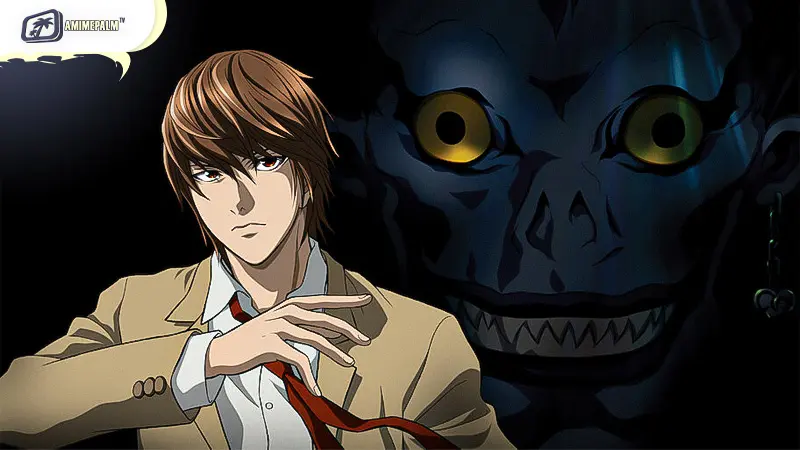
At its core, the story follows Light Yagami, a brilliant but bored high school student who discovers a supernatural notebook called the Death Note, dropped by the mischievous Shinigami (death god) Ryuk. Anyone whose name is written in it dies, usually of a heart attack unless specified otherwise. Light decides to use it to rid the world of criminals, adopting the alias “Kira” and sparking a global debate on justice. But when the enigmatic detective L starts hunting him down, it turns into an epic battle of wits. Major themes like justice, morality, and the corrupting influence of absolute power are woven throughout, making you root for and against characters in the same breath.
Set in a realistic modern Japan with supernatural elements, the tone is dark, suspenseful, and psychological, think thriller meets horror. No wonder it became a cultural juggernaut. The death note anime has had massive impact, inspiring fan art, cosplay, and even real-world controversies (like schools banning notebooks with “Death Note” written on them). In Japan, it won awards like the Tokyo Anime Award, and internationally, it’s often hailed as a gateway anime for newcomers. Sites like MyAnimeList rate it around 8.6/10, with critics praising its intelligence and pacing. Its fan base is huge and dedicated, spawning memes, theories, and endless debates about who was right, Light or L?
As for watching it today, the death note anime is widely available. You can stream it on platforms like Netflix, Crunchyroll, Hulu, Amazon Prime Video, Peacock, and even the Roku Channel for free in some cases. It’s offered in both subbed (original Japanese with subtitles) and dubbed versions, the English dub is solid, with Brad Swaile nailing L’s quirky voice. If you’re like me and prefer the raw intensity, go subbed, but the dubs make it accessible for everyone.
Death Note Anime Episodes
The death note anime episodes total 37, all in one season without breaks or fillers, which keeps the momentum going strong. There are also two special OVAs called “Death Note: Relight” (Visions of a God and L’s Successors), which are basically recaps with some new footage and alternate perspectives, worth a watch if you’re craving more after the main series.
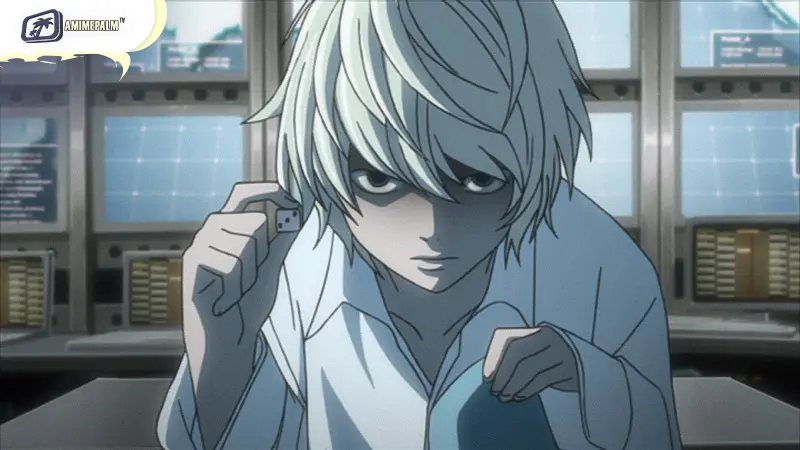
Breaking it down, the episodes are packed with key arcs that build the tension masterfully. The first half (episodes 1-25 or so) is the golden era: Light’s rise as Kira, his cat-and-mouse game with L, and the introduction of Misa Amane as the Second Kira. Highlights include the tennis match episode (a genius metaphor for their rivalry) and the shocking FBI agent arc where Light’s manipulations really shine. Then, post-episode 25, we shift to the successors arc with Near and Mello, ramping up the stakes with more elaborate schemes and betrayals. Major plot developments include Light joining the task force, the Yotsuba Group detour (a clever red herring), and the explosive finale where everything unravels.
The episode structure is tight, each one ends on a cliffhanger that had me clicking “next” immediately. Pacing is lightning-fast in the beginning, slowing a bit in the second half for more strategy, but it never drags. As a fan, I appreciate how it keeps you guessing; one wrong move, and bam, someone’s name is in the book.
Compared to the manga, the death note anime episodes are pretty faithful, but there are tweaks for TV. Some minor scenes are cut for time, like extended internal monologues, and the ending is softened a tad, Light’s death feels more poetic in the anime, dying alone after escaping, versus the manga’s more humiliating version where he’s begging Ryuk. A few animations amp up the drama, like Naomi Misora’s death scene, which is way more atmospheric in the anime. If you’ve read the manga first, you’ll notice these, but the anime stands on its own brilliantly.
Death Note Anime Series
Diving into the death note anime series production, Studio Madhouse knocked it out of the park under director Tetsurō Araki, with scripts adapted by Toshiki Inoue. The animation style is crisp and detailed, with shadowy lighting that amps up the noir vibe, those close-ups on eyes during tense moments? Chef’s kiss. The soundtrack by Yoshihisa Hirano and Hideki Taniuchi is iconic, blending orchestral swells with rock tracks, and don’t get me started on the opening themes like “The World” by Nightmare or the trippy “What’s up, people?!” by Maximum the Hormone.
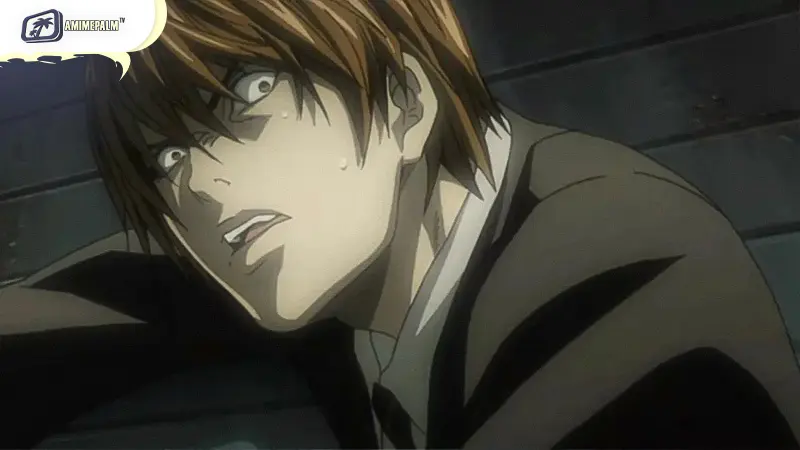
The original TV series is the heart of it all, but there are tons of versions and adaptations. Compared to the live-action movies (like the 2006 Japanese films or the 2017 Netflix one), the anime stays truer to the source while being more visually dynamic. Spin-offs include the Relight OVAs, a 2015 TV drama, a musical (yes, with singing Shinigami), and even one-shot manga specials like the 2020 “Never Complete” story. No full reboots yet, but who knows, fans are always clamoring for more.
Release-wise, it aired weekly on Nippon TV in Japan from October 3, 2006, to June 26, 2007, with international releases following soon after on networks like Adult Swim in the US. Reruns pop up occasionally, and it’s been syndicated worldwide ever since.
Death Note Anime Characters
Ah, the death note anime characters, these are what make the series unforgettable. Let’s start with the mains.
Light Yagami, our anti-hero protagonist, is a genius student turned god-complex vigilante. His descent from idealist to megalomaniac is chilling; I remember feeling conflicted, admiring his smarts while hating his arrogance. Voiced by Mamoru Miyano, he’s charismatic and terrifying.
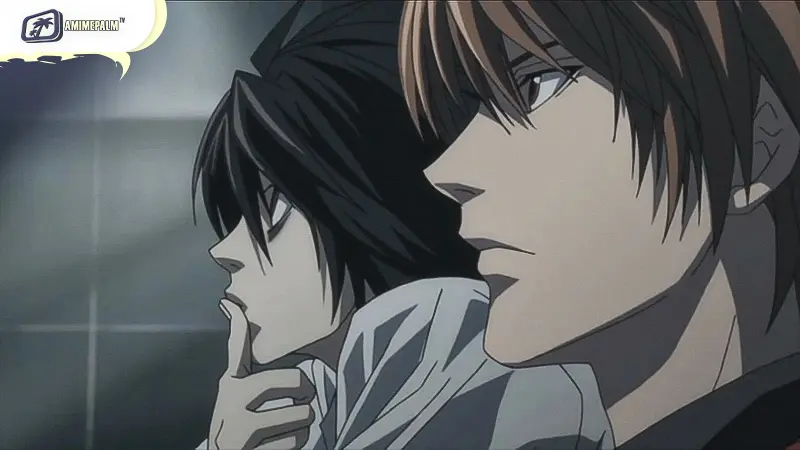
Then there’s L Lawliet, the sugar-addicted detective genius. With his messy hair, crouching posture, and deadpan humor, he’s the perfect foil to Light. Their rivalry is the show’s soul, L’s deductions are mind-blowing, and his motivations stem from a pure (if eccentric) pursuit of justice. As a fan, L is my absolute favorite; his quirks make him so human despite being a recluse.
Ryuk, the apple-loving Shinigami, brings comic relief with his bored demeanor and otherworldly design. He’s not evil, just entertained by human chaos, voiced hilariously by Nakamura Shidō II.
Misa Amane, the bubbly model and Second Kira, adds romance and fanaticism. Her obsession with Light leads to wild plot twists, but she’s more than eye candy; her backstory with Rem (another Shinigami) adds depth.
Supporting cast shines too: Near and Mello, L’s successors, bring fresh energy, Near’s calm logic versus Mello’s impulsive mob ties create great conflict. The police task force, like Light’s dad Soichiro Yagami (a man of unwavering integrity) and the comic Matsuda, ground the story in reality. Other humans like Kiyomi Takada and Teru Mikami amp up the Kira cult vibes, while Shinigami like Rem show emotional layers beyond Ryuk’s apathy.
Character development is top-tier, relationships evolve from alliances to betrayals, with conflicts rooted in clashing ideologies. Light and L’s “friendship” is tense genius versus genius; Misa’s love for Light is tragic and manipulative. Fan favorites? L tops polls, followed by Light and Ryuk, with merch everywhere from figures to notebooks (handle with care!). Rankings on sites like Charapedia often put L at #1 for his meme-worthy moments.
Overall, what I love as a fan is how these characters feel real, their motivations drive the plot, making every death note entry feel personal and profound.
If this review has you itching to dive in or rewatch, do it! The death note anime is a timeless thrill ride. For more anime news, reviews, and updates, head over to AnimePalm, we’ve got the latest on all your favorites.
