
Among the many side films of the One Piece franchise, few are as divisive as One Piece: The Cursed Holy Sword.Released in 2004 and directed by Kazuhisa Takenouchi, this film — also known simply as One Piece Movie 5 – takes a bold step away from the series’ usual pirate adventures and dives into something more mystical and introspective.
Instead of focusing on Luffy carefree leadership, the spotlight falls entirely on Roronoa Zoro, the stoic swordsman whose loyalty and honor define much of the Straw Hat crew’s moral core.But does the film do justice to Zoro character? Or does it stumble under the weight of its own cursed sword?
Let’s Animepalm.tv break it down.
Story Overview: The Curse of the Seven-Star Sword
The Straw Hat Pirates arrive at Asuka Island, drawn by rumors of a legendary weapon known as the Seven-Star Sword – a mythical blade said to be cursed. Soon after landing, the crew splits up, and Zoro mysteriously disappears. Moments later, the crew witnesses a shocking scene: Zoro, fighting alongside the Marines, attacking a peaceful village.
It turns out Zoro has reunited with his childhood friend Saga, now the head of a Marine dojo and the guardian of the Seven-Star Sword. However, Saga is slowly being consumed by the sword’s demonic power, and his plan to “seal” the weapon is merely a front — he’s being manipulated by the very curse he seeks to destroy.
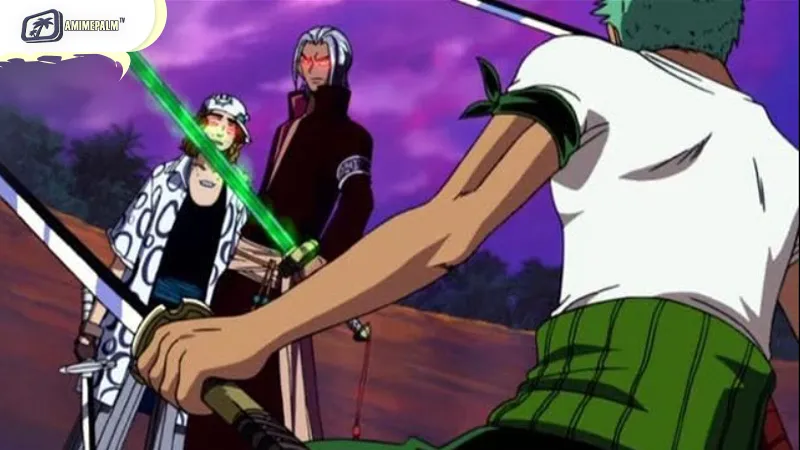
As the cursed sword begins to awaken, Zoro must choose between keeping a promise to his old friend and staying loyal to his current crew. It’s a classic Zoro dilemma: duty, pride, and the unshakable code of a swordsman.
Detailed Review: One Piece The Movie 5 (2004)
Zoro’s Spotlight and the Emotional Core
What makes One Piece Movie 5 special is how it centers entirely on Zoro, one of the most respected yet underexplored Straw Hats. For years, fans have known him as the embodiment of discipline and loyalty, a warrior whose moral compass never wavers. Here, however, he faces an inner struggle — between keeping a promise from the past and protecting his chosen family in the present. This emotional dilemma adds rare vulnerability to Zoro character. His stoic silence hides the turmoil of a man torn by conflicting loyalties.
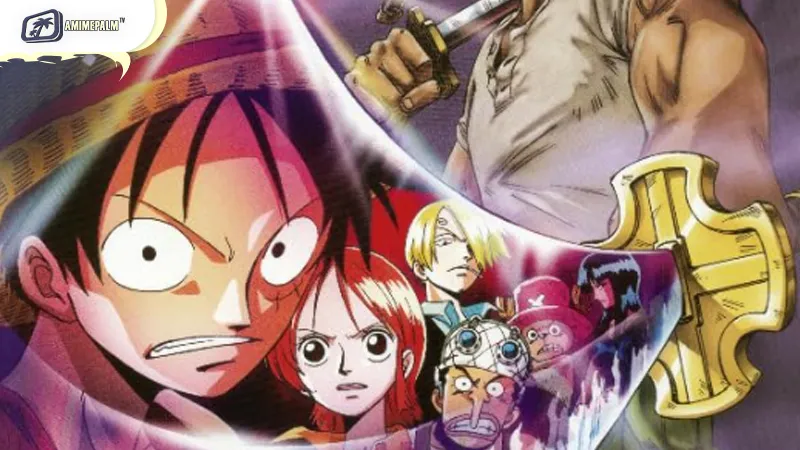
The climactic duel with Saga encapsulates this beautifully, especially when Zoro declares, “To be the greatest swordsman, I must be able to cut even my friends.” The line strikes deep, representing the harsh philosophy that defines his journey. Despite the film’s imperfections, Zoro emotional arc gives The Cursed Holy Sword an introspective weight rarely seen in early One Piece movies, transforming it from a mere filler adventure into a quiet meditation on honor and sacrifice.
Visuals, Animation, and Action
Visually, One Piece the Movie 5 stands out for its refined samurai-inspired style. The direction leans heavily on traditional Japanese aesthetics — bamboo forests, misty shrines, and crimson skies — that perfectly complement Zoro presence.
While the animation lacks the polish of later releases like Strong World or Stampede, it maintains fluid motion and sharp choreography. Each sword clash is deliberate, filled with tension and artistry rather than pure spectacle. The battle sequences — especially Zoro final duel with Saga — balance emotional weight with kinetic power, capturing both the physical and philosophical stakes of the fight.
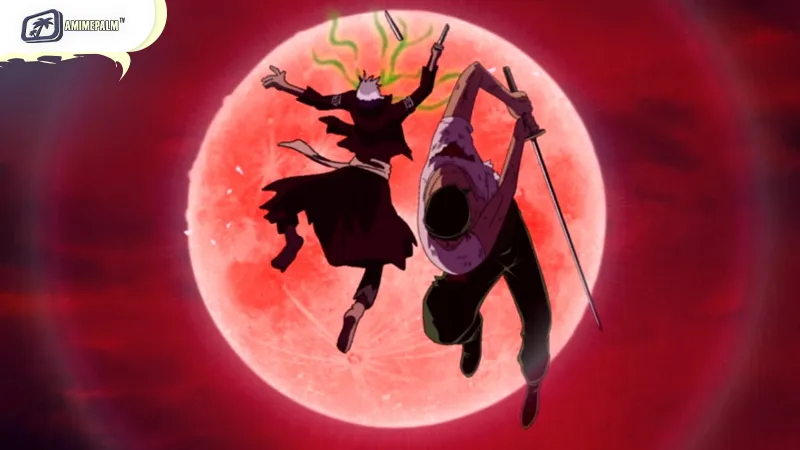
The film’s color palette is moody, dominated by dark greens and muted reds, enhancing the cursed atmosphere of Asuka Island. The soundtrack, composed by Michiru Ōshima, amplifies this tone through traditional instruments and heroic melodies. Together, they create an immersive audio-visual experience that feels distinct from the typical One Piece adventure — more like a historical drama than a pirate romp, yet still undeniably captivating.
Weak Points and Missed Opportunities
Despite its impressive visuals and samurai atmosphere, One Piece: The Cursed Holy Sword (also known as One Piece Movie 5) falls short in several key areas that keep it from becoming a true One Piece classic:
- Zoro Feels Out of Character: In the main series, Zoro is loyal to a fault, yet here he leaves the Straw Hat crew with little explanation. This sudden betrayal contradicts his principles and weakens the emotional stakes of the story.
- Too Much Fantasy, Not Enough One Piece Logic: The movie replaces the usual Devil Fruit or Haki mechanics with curses, demonic possession, and divine rituals. These mystical elements feel out of place, making it seem like a Naruto side story instead of a One Piece adventure.
- Dragged-Out Middle Section: The pacing slows considerably with filler-like dungeon scenes featuring Luffy and Usopp that add little to the main conflict.
- Forgettable Supporting Characters: Figures like Saga’s subordinates and the island priestess Maya lack development, reducing their impact on the emotional payoff.
Themes and Symbolism
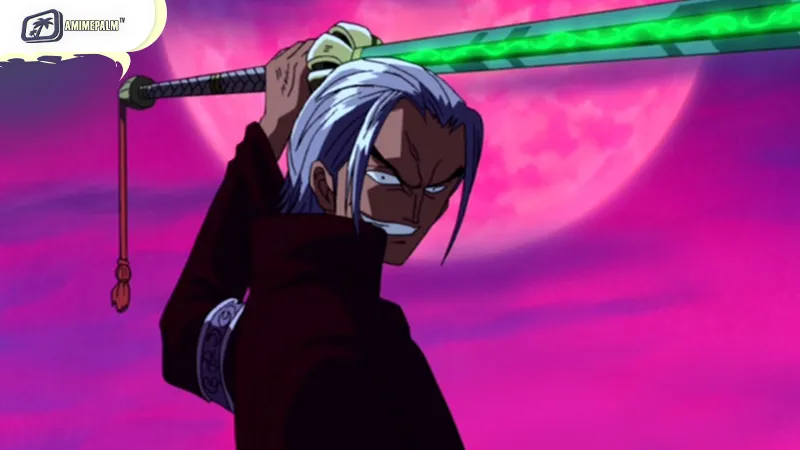
At its core, One Piece: The Cursed Holy Sword explores timeless themes — loyalty, honor, and the cost of ambition. The cursed sword serves as both a weapon and a metaphor: power that promises greatness but corrupts the soul. Saga’s downfall mirrors what Zoro could become if he ever surrendered his moral code in pursuit of strength. Their friendship, once pure, becomes the battlefield for this idea — one man consumed by darkness, the other fighting to resist it.
The film also contrasts faith and willpower. While the island’s priestess depends on divine prayers to stop evil, Zoro trusts only in his blade and resolve. This conflict between belief and determination fits neatly within One Piece larger philosophy – that true strength comes from conviction, not destiny. Though the movie’s mystical backdrop feels foreign, its underlying message resonates deeply with Zoro identity as a swordsman. Even when clouded by flaws, The Cursed Holy Sword remains thematically rich and emotionally grounded.
Conclusion
One Piece: The Cursed Holy Sword is far from perfect, yet it remains one of the franchise’s most intriguing experiments. Its attempt to spotlight Zoro pays off in parts, giving fans a closer look at his ideals and inner conflict. The film’s stunning samurai visuals and emotional duels compensate for its uneven pacing and questionable character logic. Though it strays from the core spirit of One Piece, it still delivers powerful moments that linger long after the credits roll. For Zoro fans, it’s a must-watch – a flawed gem that cuts deep, reminding us why he stands as one of anime’s most iconic swordsmen.
Final Rating: 6.7/ 10
