
Volleyball rallies that feel like boss battles. Boxing matches where every punch carries years of fear and training. Basketball games that defined a generation. The best sports anime of all time don’t just show competition. They make you feel every serve, sprint, and knockout like you’re in the arena.
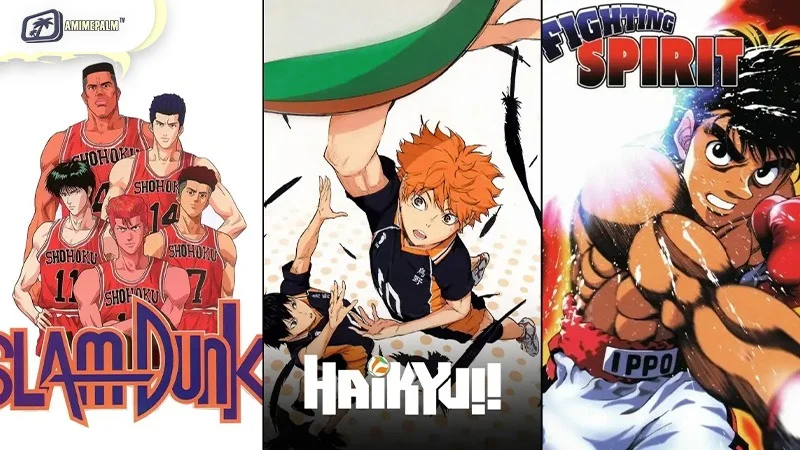
These five series are the ones fans keep coming back to. Across Reddit threads, rating charts, and late-night debates, they stand tall, loved, respected, almost impossible to dismiss. If you want stories with real stakes, real growth, and pure adrenaline, this is where the real champions play.
#1 Haikyuu!!
When people ask for sports anime recommendations, Haikyuu!! is usually the first answer. It is the safest recommendation for beginners and is still respected by veteran fans. We treat Haikyuu!! as the benchmark for the best sports anime of all time because it balances realism and excitement better than almost any competitor.
Very few popular sports anime avoid backlash, but Haikyuu!! does. It rarely feels dragged out, overly dramatic, or dependent on gimmicks. The tone stays competitive without becoming toxic. Even when characters clash, the conflict pushes growth instead of shock value. Wins feel earned. Losses feel meaningful.
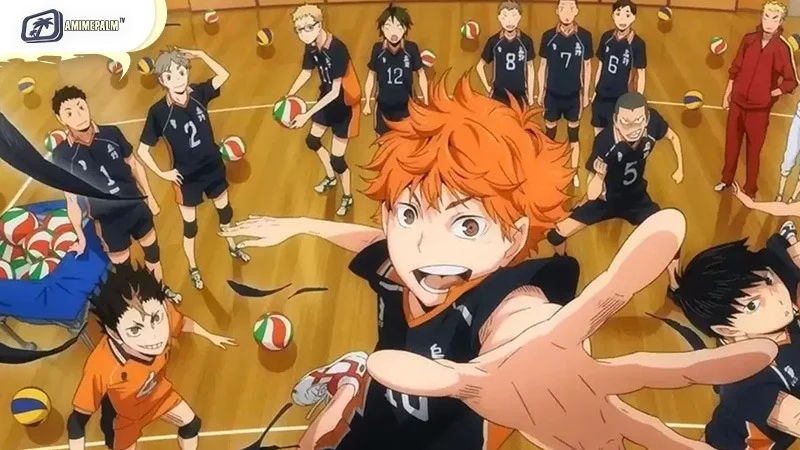
The series respects both its athletes and its audience, which keeps longtime fans loyal and newcomers comfortable. That balance is rare.
Here is a focused comparison with three similar titles, including Blue Lock, Ao Ashi, and Free!!, that are often recommended alongside it.
| Aspect | Haikyuu!! | Blue Lock | Ao Ashi | Free!! |
| Core Philosophy | Team synergy as strength | Individual ego supremacy | Tactical intelligence and systems | Personal bonds & emotional healing |
| Emotional Tone | Competitive but uplifting | Intense and confrontational | Reflective and analytical | Sentimental and relationship-driven |
| Match Structure | Clear momentum swings & role execution | Survival-style elimination tension | Strategy-heavy positional learning | Short race bursts with drama |
| Character Balance | Deep development across full roster | Spotlight rotates around standout strikers | Focus on protagonist’s growth curve | Focus centered on main friend group |
| Accessibility | Easy for beginners & veterans | Appeals more to hype-driven viewers | Appeals to tactical football fans | Appeals to character-focused viewers |
| Long-Term Rewatch Value | High due to layered rivalries & team arcs | High for intensity, lower for subtlety | Strong for football learners | Strong for emotional comfort |
What sets Haikyuu apart is not that it does one thing louder but does many things consistently well. It blends accessibility, emotional payoff, and technical clarity without leaning too heavily into spectacle, niche tactics, or pure character drama. That balance is why it takes the number one spot on this list instead of its closest competitors.
Verdict: Why It Still Wins in 2026?
Even in discussions about new sports anime 2026, Haikyuu remains the standard. Many newer shows are compared directly to it. If we measure other titles by clarity, emotional build-up, and ensemble growth, Haikyuu consistently scores high. It is not just popular. It is structurally strong.
#2 Slam Dunk
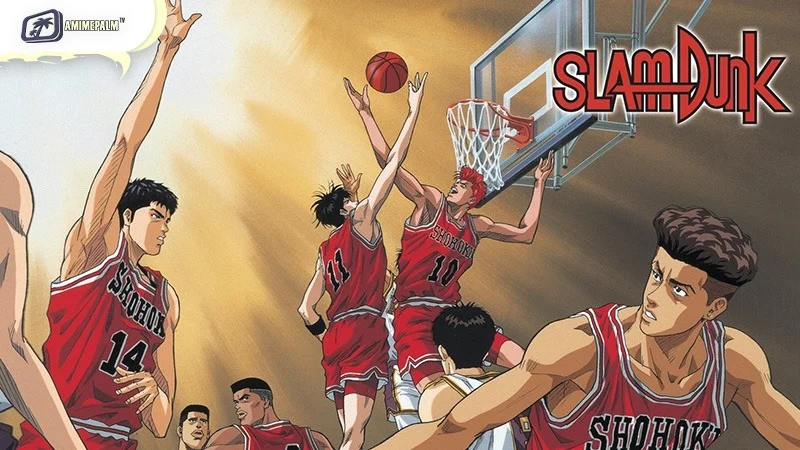
When older fans debate the best sports anime of all time, Slam Dunk always enters the conversation. It helped define how basketball is portrayed in anime. It influenced pacing, humor, and team dynamics in later titles.
Although Slam Dunk and its similar titles, Kuroko’s Basketball and Diamond no Ace, are respected sports anime, some aspects show why Slam Dunk earns the top spot in this ranking.
| Aspect | Slam Dunk | Kuroko’s Basketball | Diamond no Ace |
| Narrative Focus | Personal growth integrated into team evolution | Rival-driven power escalation | Long-form competitive progression |
| Protagonist Arc Design | From delinquent novice to disciplined athlete | From support player to tactical weapon | From raw pitcher to team contender |
| Match Tension Source | Fundamentals, stamina, mental endurance | Signature moves and surprise counters | Pitching duels and tournament stakes |
| Emotional Weight | Built through repeated failure and small victories | Built through dramatic rival showdowns | Built through season-long grind |
| Character Transformation | Visible personality maturation | Skill evolution more than personality shift | Gradual confidence development |
| Cultural Impact | Genre-defining foundation | Modern spectacle standard | Baseball realism benchmark |
Overall, Slam Dunk stands above the others because its transformation feels holistic. It is not just about improving skills or climbing brackets. It is about changing mindset, discipline, and identity. The growth affects both the player and the team culture. That deeper human progression is why it earns the number one spot over equally strong contenders.
Verdict: Why It Still Wins?
Slam Dunk is still relevant not simply for its legacy, but for its storytelling mechanics: steady character progression, authentic team chemistry, well-balanced humor and drama, and basketball tactics that remain clear and engaging today.
Even modern fans discovering sports anime to watch 2025 often rank Slam Dunk highly. The storytelling fundamentals hold up. It shaped the genre without feeling outdated.
#3 Hajime no Ippo
Hajime no Ippo is often cited in community threads as one of the best sports anime of all time, especially among long-time fans. Its strength lies in technical and psychological growth.
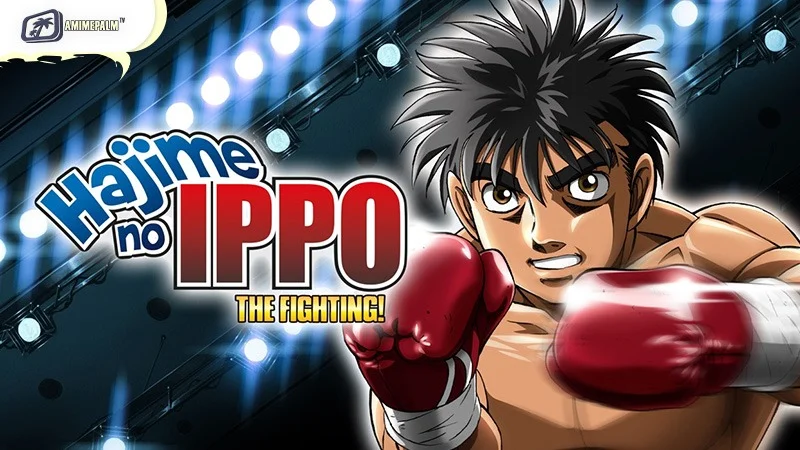
Let’s see why Hajime no Ippo earns the top position over other combat-focused sports anime such as Megalo Box and Baki.
| Aspect | Hajime no Ippo | Megalo Box | Baki |
| Core Conflict | Self-doubt vs discipline | Identity vs system | Strength vs domination |
| Fight Logic | Strategy rooted in real boxing mechanics | Enhanced gear changes combat dynamics | Physical extremes override realism |
| Damage Consequences | Injuries accumulate and affect future matches | Damage is stylized and symbolic | Characters often endure unrealistic punishment |
| Career Progression | Clear ranking climb within boxing structure | Narrative arc tied to one major tournament | Power scaling through increasingly absurd opponents |
| Psychological Depth | Fear, pressure, and mentorship explored deeply | Themes of freedom and rebellion | Focus on proving physical superiority |
| Viewer Investment | Long-term attachment to growth journey | Emotional payoff centered on thematic arc | Shock factor and spectacle drive engagement |
Hajime no Ippo stands above the others because it treats boxing as a profession, not just a stage for spectacle. Every match connects to career stakes, accumulated damage, and emotional maturity. Growth is technical, mental, and structural. That layered progression gives it lasting weight beyond pure hype.
Verdict: Why Fans Rarely Reject It?
Hajime no Ippo rarely receives strong criticism because its character arcs unfold with patience and purpose. Losses carry real consequences, opponents are treated with respect, and training feels authentic. For many fans, it defines what great combat sports storytelling should look like.
#4 Ping Pong the Animation
Ping Pong the Animation is often described as a masterpiece even by viewers who are not table tennis fans. Some hesitate because of its art style. However, once watched, it frequently converts skeptics.
What makes Ping Pong the Animation stand apart is its precision. The short episode count leaves no room for filler, allowing tight storytelling and deep psychological focus. It explores talent, effort, identity, and competitive pressure with emotional honesty, avoiding the typical tournament-driven formula.
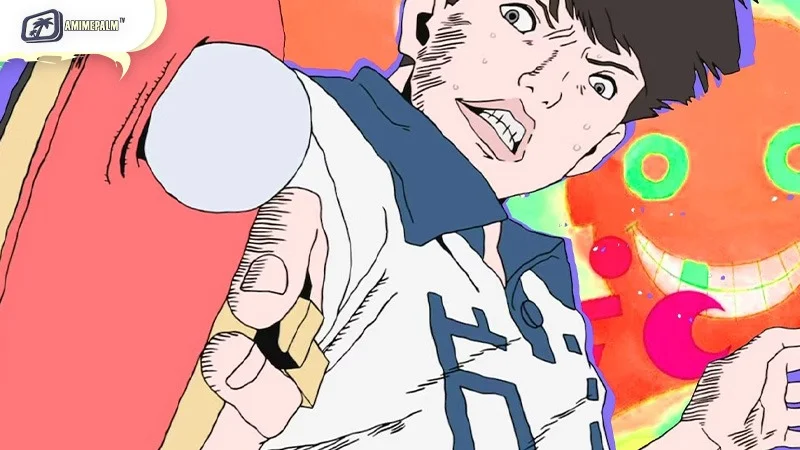
Take a look at a comparison of Ping Pong the Animation with two other character-driven sports anime, Chihayafuru and One Outs, that are often praised for psychological storytelling.
| Aspect | Ping Pong the Animation | Chihayafuru | One Outs |
| Narrative Compression | Complete character arcs in 11 tight episodes | Multi-season emotional build | Episodic mind-game confrontations |
| Thematic Core | Talent vs effort, identity crisis, burnout | Passion, romance, long-term aspiration | Psychological manipulation and strategy |
| Character Vulnerability | Raw emotional exposure and insecurity | Gradual emotional growth | Calculated emotional detachment |
| Competitive Framing | Sport as personal self-discovery | Sport as lifelong devotion | Sport as battlefield of intellect |
| Mentorship Role | Deep mentor-student psychological influence | Supportive guidance structure | Tactical partnership dynamic |
| Emotional Aftertaste | Reflective and introspective | Warm and motivational | Thrilling and cerebral |
Ping Pong the Animation stands at number one because it delivers a complete psychological transformation with remarkable efficiency. It strips competition down to internal struggle and identity, making every match feel existential rather than procedural. That concentrated emotional honesty gives it unmatched artistic weight.
Verdict: Why It’s Hard to Hate?
Even viewers who hesitate because of the art style often end up respecting its writing. The themes stay consistent, the emotions feel earned, and the craft is undeniable. As modern audiences seek deeper, character-driven storytelling, its reputation will likely continue to grow rather than fade.
#5 Run with the Wind
Run with the Wind is frequently recommended alongside Haikyuu and Ippo. It proves that sports anime can focus on purpose and personal growth.
What makes Run with the Wind stand out is its grounded approach to ambition and teamwork. The story highlights individual motivation, shared responsibility, and the quiet discipline required to improve. Characters face realistic physical limits and adult-level decisions that shape their futures.
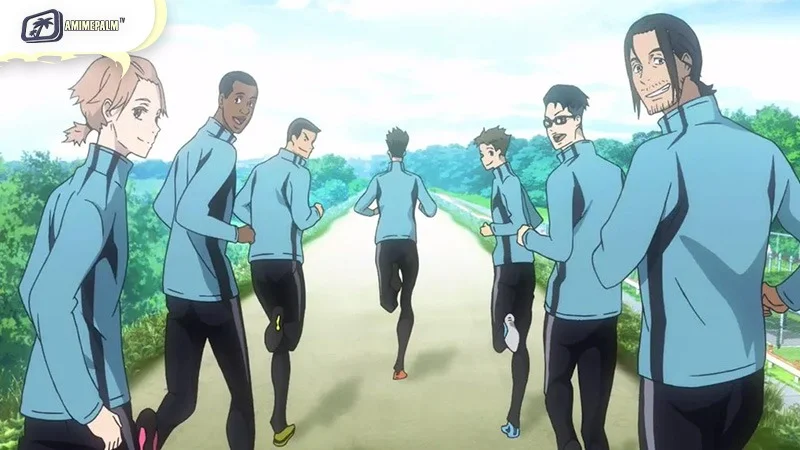
Distance running becomes cinematic without dramatic exaggeration, driven by pacing and emotional buildup. It is not just slice-of-life storytelling. It is structured competitive growth.
We compare Run with the Wind with two other respected team-centered sports anime: Yowamushi Pedal and Tsurune. The following elements explain why it earns the top position in this category.
| Aspect | Run with the Wind | Yowamushi Pedal | Tsurune |
| Age & Life Stage Focus | College athletes facing adult futures | High school competitors chasing glory | High school archers overcoming personal doubt |
| Definition of Success | Completion, growth, and shared achievement | Winning inter-high competitions | Restoring confidence and form |
| Team Dynamic Structure | Equal narrative weight across all ten members | Central spotlight on key cyclists | Emotional core centered on a small friend circle |
| Socioeconomic Realism | Financial strain, scholarships, housing pressure | Minimal real-world economic stakes | Limited external life pressures |
| Goal Urgency | Time-sensitive qualification for Hakone Ekiden | Seasonal tournament progression | Gradual club improvement |
| Emotional Tone | Reflective yet forward-looking | Energetic and exaggerated | Quiet and introspective |
Run with the Wind stands at number one because it connects athletic ambition with real-world adulthood. The stakes extend beyond medals into identity, career direction, and shared responsibility. That grounded, transitional realism gives it lasting weight beyond pure competition or personal healing arcs.
Verdict: Why It Remains Respected?
Even today, its reputation holds because it portrays ambition without exaggeration and competition without hostility. The series resonates with viewers who value maturity, patience, and long-term growth. As audiences increasingly appreciate grounded storytelling, its quiet realism feels even more relevant and timeless.
All in all, across decades and trends, these five series continue to define what great sports storytelling looks like. They are not just popular sports anime. They are structurally strong, emotionally grounded, and widely respected across generations.
If you are searching for the best sports anime of all time, this focused list gives you the safest and strongest starting point. Watch them, compare them, and see why they still win.
